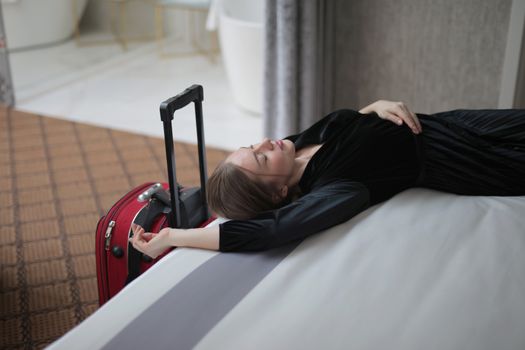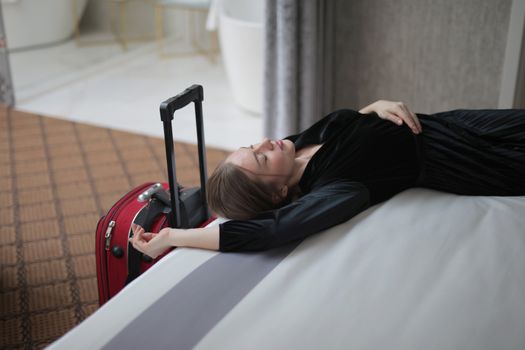
Traveling across time zones is a marvel of our modern world, but it often comes with an unwelcome companion: jet lag. Most frequent flyers, international business travelers, and vacationers have experienced the disorienting effects of jet lag, from sleepless nights to groggy mornings. But what really happens inside your body when you fly across continents? Understanding the science behind jet lag can empower you to prepare, adapt, and recover more effectively, making your journeys healthier and more enjoyable.
The Biological Clock: How Circadian Rhythms Regulate Our Lives
At the heart of jet lag lies our circadian rhythm, the internal biological clock that orchestrates daily cycles of sleep, alertness, hormone production, and body temperature. This rhythm is primarily regulated by the suprachiasmatic nucleus (SCN), a cluster of about 20,000 nerve cells in the hypothalamus. The SCN responds to environmental cues, especially light, helping synchronize our physiology to the 24-hour day-night cycle.
Natural sunlight is the strongest regulator of our circadian rhythm. When light hits the retina in our eyes, it sends signals to the SCN, which then adjusts the production of melatonin, the hormone responsible for making us feel sleepy. When this cycle is disrupted—such as after a long-haul flight across several time zones—the internal clock falls out of sync with the new local time, creating a mismatch between your body’s expectations and your environment.
For example, flying from New York to Paris (a six-hour time difference) can leave your body thinking it’s 8 p.m. when it’s actually 2 a.m. locally. This desynchronization is the root cause of jet lag’s symptoms.
Jet Lag Symptoms: More Than Just Sleeplessness
Jet lag is notorious for causing sleep disturbances, but its impact is far-reaching. Some of the most common symptoms include:
- Insomnia or trouble falling asleep at night - Excessive sleepiness during the day - Difficulty concentrating - Impaired physical or mental performance - Digestive problems, such as constipation or diarrhea - Mood changes, such as irritability or mild depressionA 2021 study published in the journal $1 found that nearly 70% of people flying across five or more time zones reported moderate to severe jet lag symptoms. In addition, athletes and business travelers, whose performance and decision-making are critical, may experience measurable declines in effectiveness due to jet lag.
The direction of travel also matters. Generally, eastbound flights (where you "lose" hours) induce more severe jet lag than westbound flights (where you "gain" hours), because advancing your body clock is harder than delaying it.
The Science of Time Zone Changes: Why Jet Lag Happens
Jet lag, also known as desynchronosis, arises when the body’s internal clock cannot immediately adjust to a new time zone. The rate at which the circadian rhythm adapts is limited. Research suggests that the human body can adjust to a time change of about 1-2 time zones per day. So, if you cross six time zones, it may take three to five days to fully acclimate.
The key scientific mechanism at play is the delayed or advanced secretion of melatonin and other circadian-controlled hormones. For example, if you fly east from Los Angeles to London (an eight-hour difference), your body will still produce melatonin in line with California’s night, not London’s, making it hard to fall asleep at a normal hour in the UK.
Other physiological systems—such as digestion, alertness, and even immune function—are also regulated by circadian rhythms. When these systems are out of phase with the local environment, the body experiences a form of physiological stress, manifesting as the symptoms of jet lag.
Factors That Influence Jet Lag Severity
Not everyone experiences jet lag the same way. Several factors influence its intensity and duration:
- $1: The greater the difference, the more pronounced the symptoms. - $1: Eastward travel tends to be harder, as it requires advancing your internal clock. - $1: Older adults may take longer to recover from jet lag. - $1: People with irregular sleep schedules or existing sleep disorders are more susceptible. - $1: "Morning larks" may adapt more easily to eastward travel, while "night owls" may fare better with westward flights.Below is a table summarizing the impact of different factors on jet lag severity:
| Factor | Influence on Jet Lag | Example |
|---|---|---|
| Number of Time Zones Crossed | Higher number increases severity | 8 zones (NYC to Moscow) vs. 3 zones (NYC to LA) |
| Direction (East vs. West) | East is typically harder | LA to London (harder) vs. London to LA (easier) |
| Age | Older travelers adjust more slowly | 55-year-old vs. 25-year-old on same route |
| Sleep Habits | Poor habits worsen symptoms | Irregular sleeper vs. consistent sleeper |
| Chronotype | Larks adjust better going east | Early riser vs. night owl |
Strategies to Minimize and Manage Jet Lag
While it’s difficult to completely avoid jet lag, several science-backed strategies can help minimize its effects:
1. $1: In the days leading up to travel, shift your bedtime and wake-up time closer to your destination’s time zone. For eastbound travel, go to bed and get up earlier; for westbound, stay up and wake later. 2. $1: Upon arrival, spend time outdoors in natural sunlight. Light exposure helps reset your body clock. For eastward travel, seek morning sunlight; for westward, get evening sun. 3. $1: Short-term use of melatonin (0.5-5 mg) can help promote sleep at the appropriate local time. A 2014 meta-analysis in $1 found that melatonin is effective in reducing jet lag symptoms when taken close to the target bedtime. 4. $1: Dehydration can worsen jet lag symptoms. Alcohol and caffeine can disrupt sleep, making adaptation harder. 5. $1: If possible, schedule stopovers to break up very long flights and give your body more time to adjust. 6. $1: Use earplugs, eye masks, and blackout curtains to create a sleep-friendly environment. Avoid screens and bright lights before bedtime.A practical example: If flying from Chicago to Paris, begin moving your bedtime earlier by 30-60 minutes each night two to three days before departure, and seek morning sunlight in Paris to reset your clock.
Jet Lag in Special Populations: Athletes, Pilots, and Shift Workers
Jet lag can be particularly problematic for people whose performance or safety depends on optimal alertness. Elite athletes, for example, often compete internationally and must adapt quickly to new time zones to maintain peak performance. Studies have shown that athletic performance can decline by up to 10% after crossing more than five time zones, particularly with eastward travel.
Airline pilots and cabin crews also face chronic circadian disruption, which has been linked to higher rates of sleep disorders and, in some studies, increased health risks such as cardiovascular disease. Airlines often provide tailored schedules and strategies to help crews manage fatigue and jet lag.
Shift workers—though not technically experiencing jet lag—often suffer from a similar misalignment between their internal clocks and external schedules, leading to health and safety risks over time.
Why Understanding Jet Lag Matters for Health and Well-being
The science behind jet lag reveals that it’s not just an inconvenience; frequent or severe circadian disruption can have lasting health consequences. Chronic sleep deprivation and circadian misalignment have been linked to increased risks of obesity, diabetes, cardiovascular disease, and even some cancers.
Understanding jet lag helps travelers make informed choices about their routines, schedule important activities wisely, and use proven strategies to adapt faster. From business executives to leisure tourists, anyone crossing time zones can benefit from a science-based approach to managing jet lag and protecting long-term health.